
Sure. Affirmations are messages to ourselves advocating things we want, repeated many times. That’s exactly what we’re doing. But 21st century technology gives us tools to do it really, really well.
The concept of giving yourself positive messages about things you want in your life is nothing new. The idea was first introduced by a French psychologist named Emile Coue in the 1920’s. Coue suggested that consciously repeating words or images as self-suggestion to the subconscious mind could condition the mind. He was the author of the famous affirmation, “Every Day In Every Way I Am Getting Better And Better”.
According to Wikipedia, an affirmation is:
…a form of autosuggestion in which a statement of a desirable intention or condition of the world or the mind is deliberately meditated on and/or repeated in order to implant it in the mind… Affirmations are always phrased in the first person and usually in a present tense (“I am”) rather than a future tense (“I will”) in order to increase the realization of the statement for the affirmee…They appear to be most effective when … the desired outcome is vividly experienced in one’s mind and resulting emotions are felt.
Many books and articles continue to be published on the topic of affirmations. We can, and will, consult the thinking of those experts to learn about effective ways to frame our messages. Scott Adams (of Dilbert fame) recently published an interesting article about how he thinks affirmation may work.
While the concept of giving yourself positive messages about things you want in your life is not new, what has changed a great deal in 80-plus years is the technology we have available to create and deliver those messages. More than at any time in history, the power to produce media is in the hands of the people. Individuals now have the tools to capture and process photos, art, sound, and video. We have scanners, digital cameras, video recorders and sound recorders. We have word processing and desktop publishing software. We have image editing software like Photoshop to add things to our photographs that aren’t there yet. We have Google to help us retrieve pictures we need from the internet.
Using these tools, we are able to create messages which include elements that capture our attention and fascinate our brains – like color, music, voice, motion, and human faces. Others use those elements to create compelling media experiences designed to get inside our heads – why shouldn’t we?
The methods available for delivering our affirmations have also advanced. It has become normal for people to sit in front of a computer many hours a day. A computer can show you pictures, video, and sound as well as written statements. It can be instructed to automatically repeat those messages many times a day, so you don’t have to depend on remembering to say your affirmations. That’s a huge advantage.
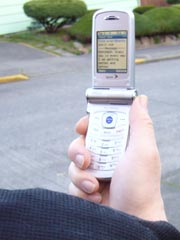
Many of us carry at least one electronic device with us even when we are away from our computers. We have cell phones, mp3 players, PDAs, and hybrids like the iPhone. Those devices can receive both voice and text messages. They can alert us with a variety of cues. They can play music. Many of them can take and display pictures and video as well. They know what time it is and may know our schedule. They know who our friends are and can communicate with them. They are connected to the internet. They may even know where we are.
Of all the marvelous powers of these wonderful little objects I think the most important one is this: you have it with you at all times. Think about it: you probably have a device in your pocket right now with at least some, if not most, of the abilities I listed above. Merely using it to receive phone calls is severely under-utilizing that power!
Finally, there have been advances in the strategies that are used to persuade you. The advertising industry has poured billions – if not trillions – of dollars in the last century into developing and testing effective methods to change human behavior. Perhaps we can use some of the techniques they’ve discovered to push the deepest buttons that motivate us to make the messages in our affirmations more effective.
TBYB! advocates using all of these tools to take the old idea of affirmations to a new level. This blog explores all of the ways I can think of to combine:
- The strategies developed by advertisers
- Tools that give us the ability to create media
- The power of personal technology to deliver those messages
Commercial interests make sure our minds are saturated with thousands of persuasive messages every day. Souping up our own messages with motivational psychology, multimedia and automated repetition gives them a fighting chance to compete.
Related articles
- How to rotate text ads with The Quote gadget
- How to rotate picture ads with the Google Photos gadget
- Rotate your ads with a screensaver slideshow
- How to send yourself text messages with Backpack
- How to write an effective ad on a Post-It note
- How to customize your computer background
- The REALLY personal ads


Leave a Reply